
Stop Living in the Doorway
Day 16 — Unseen: 2 Corinthians 5:17, Romans 6:4

Introduction
There is a particular kind of Christian that nobody talks about much.
They crossed the threshold. They prayed the prayer. They believe Jesus is who He says He is and that the door is open and that eternal life is theirs. All of that is true. All of that is settled.
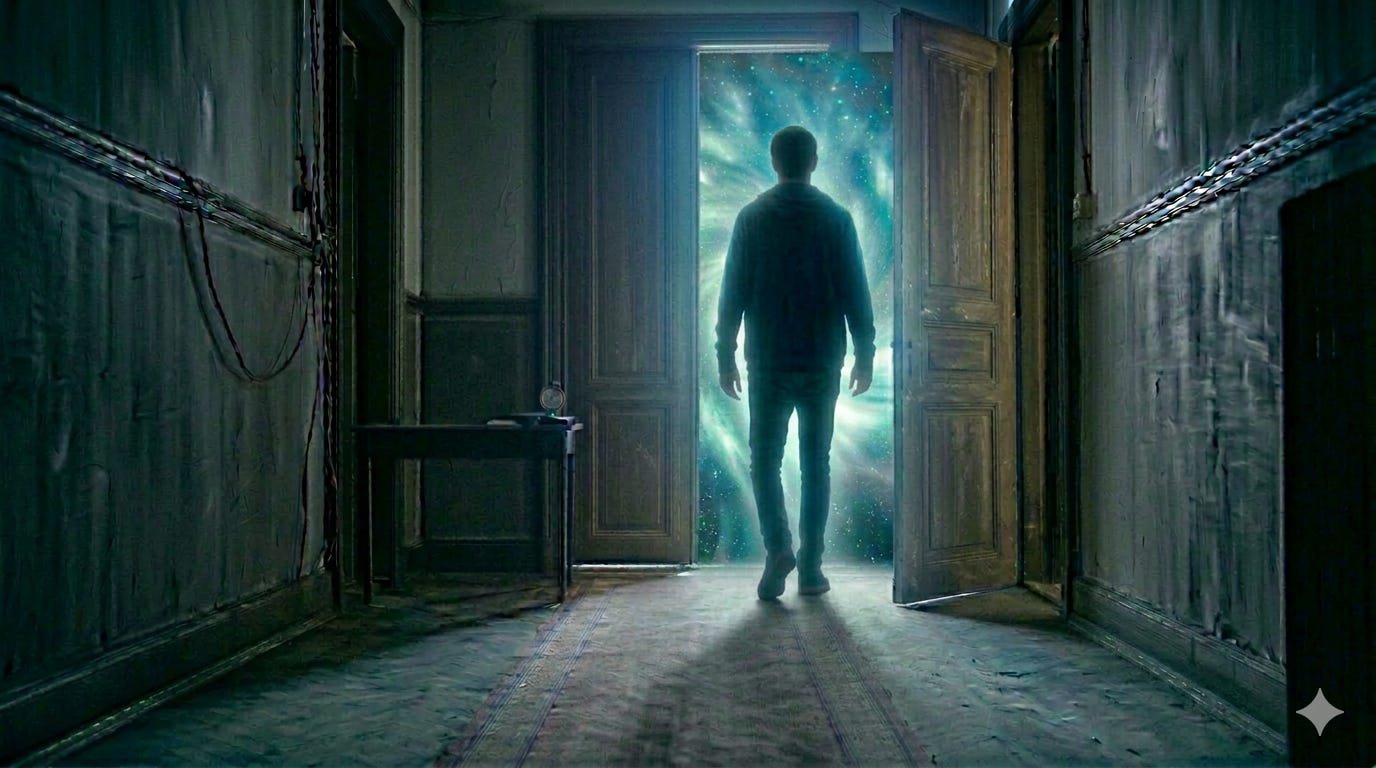
And yet somehow — years later, sometimes decades later — they are still living in the doorway.
Not outside. Not in the darkness. But not fully inside either. Hovering at the entrance. Close enough to the light to know it’s real, far enough from the center to miss the fullness Jesus described. Saved, yes. Loved, yes. But not quite experiencing the life to the full that Jesus promised when He said He came to give it.
This is not a fringe experience. This is the most common Christian life.
And it is not what Jesus had in mind.
Yesterday the door opened — or perhaps it opened again, wider this time. Today is about moving away from the entrance and deeper into the life that waits on the other side. Because walking through the door was never meant to be the destination. It was always meant to be the beginning.
Scripture
Therefore, if anyone is in Christ, the new creation has come: The old has gone, the new is here!
— 2 Corinthians 5:17 (NIV)
We were therefore buried with him through baptism into death in order that, just as Christ was raised from the dead through the glory of the Father, we too may live a new life.
— Romans 6:4 (NIV)
Reflection
The Old Has Gone
Paul’s language in 2 Corinthians 5:17 is not subtle. He doesn’t say the old has been improved or the old is being gradually replaced or the old has been forgiven and is now being managed. He says the old has gone. Past tense. Done. And in its place — not a renovation of the old, but something entirely new.
New creation. The same words used in Genesis when God spoke something out of nothing. This is not a spiritual makeover. This is a new beginning at the level of identity — the same resurrection power that raised Jesus from the dead, applied to the person who belongs to Him.
This is what it means to be on the inside of the door. You are not the same person who was standing in the darkness two weeks ago. You are not the accumulated verdict of every voice that ever spoke diminishment over you. You are not the distorted version of the image of God, striving to close the gap in your own strength.
You are a new creation. The old has gone. The new is here.
But here is the gap that most of us live in: we have received a new identity and continued living from the old one. We have been declared new and kept behaving as if we are old. We have crossed the threshold and stood just inside the door — close enough to see the light, not yet willing to let it illuminate everything.
The Surrender That Opens Everything
Paul says in Romans 6 that we were buried with Christ and raised with Him — in order that we too may live a new life. But notice the order. Burial comes before resurrection. Death comes before life. You cannot experience the new without first releasing the old.
This is the step most doorway Christians have never fully taken.
They accepted the gift of salvation. They believe the door is open. But they have never made the deeper surrender — the one Jesus described when He said whoever wants to save their life will lose it, but whoever loses their life for me will find it. The surrender of the old self. The death of the version of you that has been running on the old operating system — the one built on the accumulated verdict, the self-protection, the striving, the management of your own life as if God were a passenger rather than the driver.
This is not a surrender you make once and finish. It is the daily practice of the cross — picking it up, as Jesus said, and following Him. It is waking up and releasing, again, the control you reached for yesterday. It is bringing the areas still running on the old system — the fear, the pride, the hiding, the performing — to the foot of the cross and leaving them there.
And here is what makes it possible: you are not surrendering into emptiness. You are surrendering into the arms of the Father who is singing over you, into the hands of the Spirit who is already doing the work within you, into the life that Jesus described as full and overflowing.
The doorway existence is not the result of insufficient effort. It is the result of insufficient surrender. You cannot strive your way deeper in. You can only die your way there.
The old operating system doesn’t get upgraded. It gets replaced. And the only way to fully install the new one is to let the old one go — completely, personally, at your own hands. We must die to fully live.
Grace Note
“Now to him who is able to do immeasurably more than all we ask or imagine, according to his power that is at work within us.” — Ephesians 3:20 (NIV)
The life Jesus promised is not a modest upgrade on the one you’ve been living. It is immeasurably more than you have asked for or imagined — powered not by your effort but by His power already at work within you. You are not straining toward something distant. You are being carried toward something that exceeds your capacity to picture it. All He asks is that you release what you’ve been gripping and let Him work.
Prayer Prompt
Jesus, I think I’ve been living in the doorway. Close enough to know the light is real — not close enough to let it reach everything.
And I think I know why. I haven’t fully surrendered. I’ve accepted the gift but kept the controls. I’ve stepped through the door but kept one hand on the frame — just in case.
Today I want to let go of the frame.
Not because I feel ready — I’m not sure I ever will. But because I’m beginning to understand that the doorway existence is not what You died to give me. You came to give me life to the full. And the full life requires a full surrender.
So I’m releasing it. The old verdict. The old patterns. The old operating system that keeps running in the background even after everything You’ve shown me. I’m bringing it to the cross and leaving it there.
I can’t move deeper in by trying harder. I can only die my way there. So here I am — surrendered. Lead me into the life on the other side of that.
Amen.
Response
1. Identify the Doorway Habit: Write down one specific area of your life where you have been living from the old identity rather than the new one — a pattern of fear, self-protection, striving, or hiding that belongs to who you were, not who you are. Name it without shame. The new creation doesn’t hide from the old patterns — it brings them into the light.
2. Write the New Operating System: Take the area you identified and write down what it would look like to live from the new identity in that specific situation. Not in general — specifically. What would a new creation do differently in that moment? What would someone who is chosen, adopted, indwelt by the Spirit, and loved by a singing Father do with that fear, that pattern, that habit?
3. Take One Step Deeper: Choose one practice from this series that you will carry into the week ahead — not as a rule, but as a rhythm. The morning acknowledgment of the Spirit’s presence. The true ledger on the days when the old verdict gets loud. The five minutes of silence. The ambassador mindset in the workplace. One practice. Deeper in.
To read all the posts in this devotional series, visit: https://www.thisistheway.live/t/unseen
© Steve Peschke / This Is The Way